


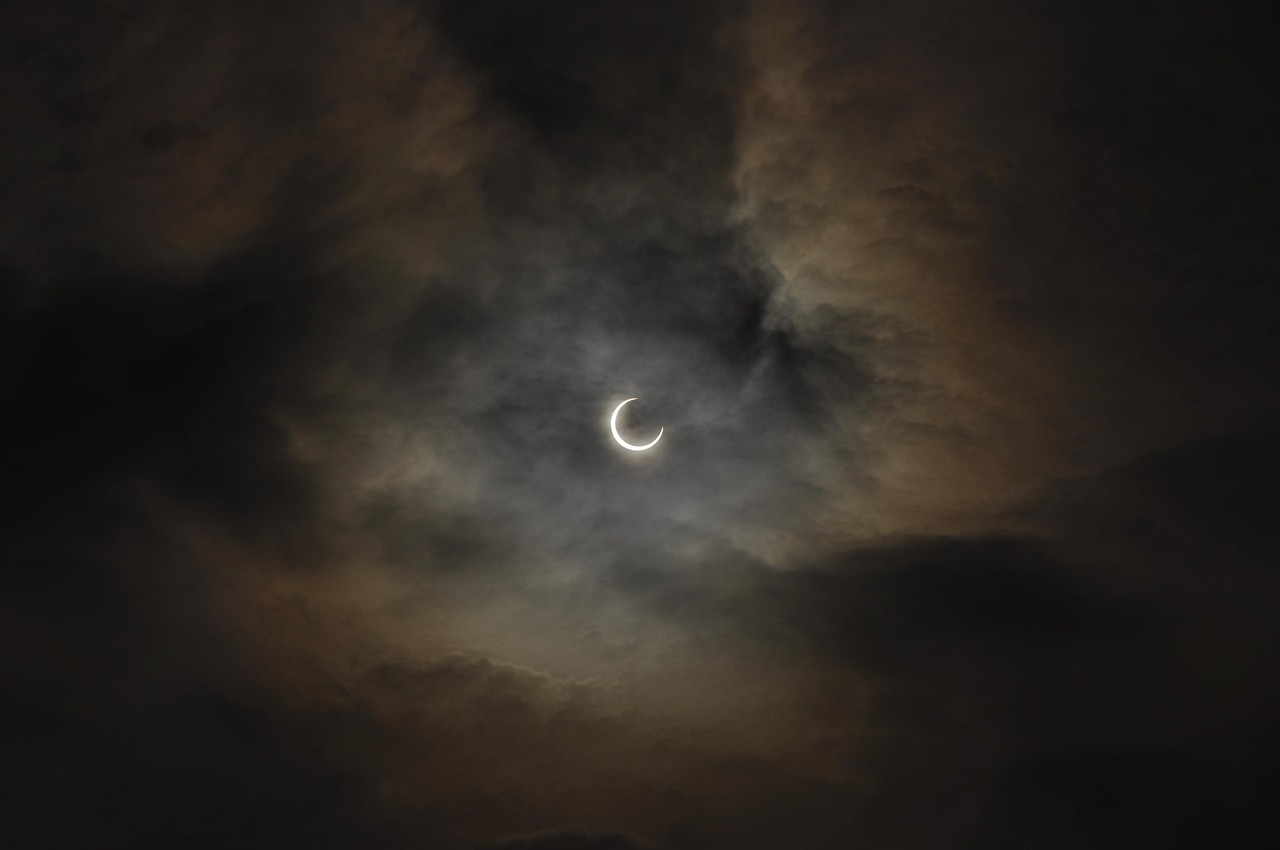
People in Renfrewshire will have the chance to see two major astronomical events tonight, with a partial solar eclipse followed by the peak of the Perseid meteor shower.
Coats Observatory in Paisley says the eclipse will begin at around 6.17pm tonight, when the Moon starts to move across the Sun.
The observatory, on Oakshaw Street West, is the oldest surviving public observatory in Scotland. It opened in 1883 after being funded by Paisley thread manufacturer and philanthropist Thomas Coats and was designed by architect John Honeyman.
At its maximum at around 7.15pm, about 90% of the Sun will be blocked by the Moon when viewed from Paisley.
The eclipse will end at around 8.05pm, although Coats Observatory says the Sun will be low on the horizon by then and is likely to be obscured by the landscape from Paisley.
The path of totality, where the Sun will be completely covered by the Moon, will pass through Iceland, Portugal and Spain.
The current forecast for Paisley is for sunny intervals, meaning there could be opportunities to see the eclipse if conditions remain clear.
Coats Observatory will not be running a live viewing of the eclipse.
Anyone hoping to watch the event is being warned never to look directly at the Sun.
Coats Observatory said: “Remember – never look at the Sun with unfiltered binoculars, a telescope or even your eyes as you will quickly and permanently damage your eyesight.”
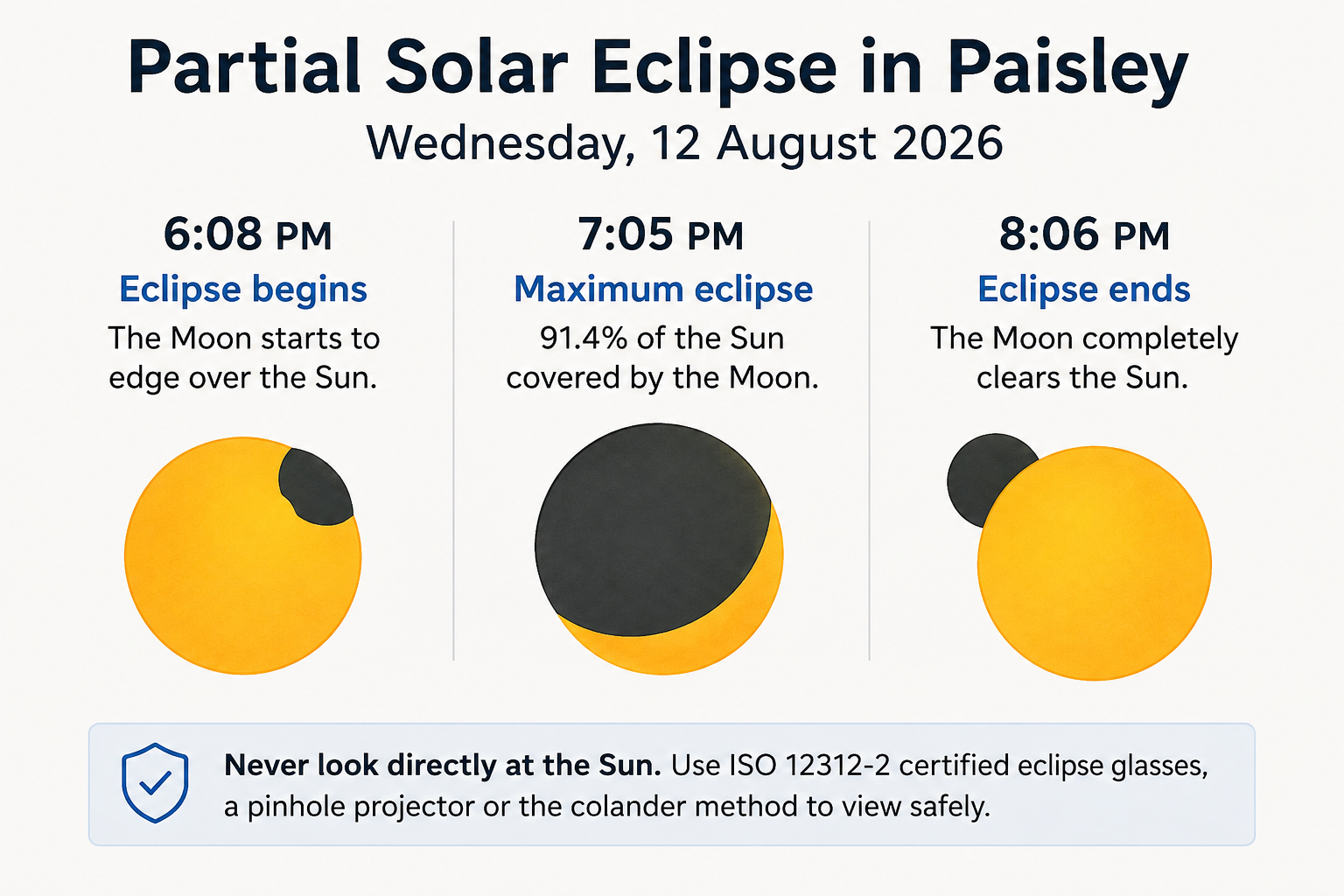
The observatory plans to share videos showing how the eclipse can be safely viewed by projecting an image of the Sun or making a cereal-box viewer.
Later tonight, attention will turn to the Perseid meteor shower, which reaches its peak overnight into Thursday.
The Perseids are active between 17th July and 24th August and happen as Earth passes through a trail of icy particles left behind by comet Swift-Tuttle.
When these small pieces enter the Earth’s atmosphere, they burn up and leave a bright streak of light known as a meteor.
The Perseids take their name from the constellation of Perseus, where the meteors appear to radiate from.
From Paisley, Perseus will be in the north-eastern sky by around 11pm tonight.
Coats Observatory said: “On the night of the peak, which falls on the 12th into the 13th of August, up to 100 meteors per hour may be seen from a dark sky location, although about 20 to 30 is more realistic.
“Meteors can appear anywhere in the sky so the best thing to do is wrap up warm, sit back in a deck chair and enjoy the show.”
You can follow Coats Observatory on Facebook for more information: www.facebook.com/Paisley.Coats.Observatory.