


Scottish Water has planted almost 80,000 trees on land near Barcraigs Reservoir in Renfrewshire to help protect water quality and improve biodiversity.
The new woodlands are part of efforts to protect water catchments from climate change and store carbon on Scottish Water land.
The trees have been planted across two sites. One covers 16.5 hectares around the reservoir, while a second site at Springside covers more than 26 hectares further up the catchment.
The project aims to stabilise soil around the reservoir. This will reduce the amount of organic material washed into the water during periods of heavy rainfall, making the treatment process simpler and less energy intensive.
The trees will also help hold more water in the ground. This will support supplies during dry periods by releasing water slowly into the reservoir.
Scottish Water said the planting will also improve biodiversity and capture more than 25,000 tonnes of carbon dioxide over the next 60 years. This is the equivalent of more than 13,000 return flights between Glasgow and Toronto.
Karlene Doherty, Senior Project Manager at Scottish Water, said: “The two sites in the catchment of Barcraigs Reservoir form a significant part of our woodland creation programme this year and it is great to see these being delivered after over two years of careful planning and consultation with key agencies and stakeholders.
“This work will provide multiple benefits in terms of protecting water quality at the reservoir, improving biodiversity at these sites and also helping to store large amounts of carbon.”
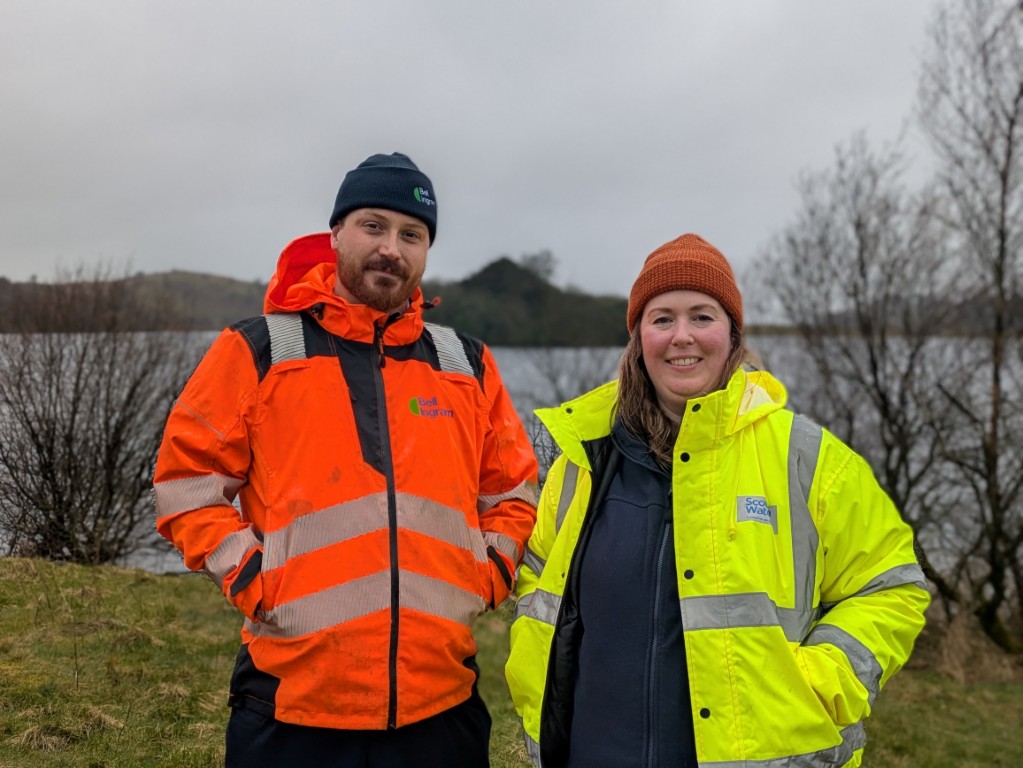
Photo: Tony Wilson of Bell Ingram and Karlene Doherty of Scottish Water at the Barcraigs Reservoir woodland site in Renfrewshire
Photo Credit: Scottish Water
The Springside site includes Walls Hill Fort, believed to be the largest Iron Age fort in Scotland.
Scottish Water’s delivery partner Bell Ingram worked with Historic Environment Scotland to maintain public access and views of the monument. Feedback from Renfrewshire Council’s biodiversity team was also used when selecting tree species.
Bell Ingram forester Tony Wilson said: “This was a really interesting project to be involved in, given the significance of the hill fort here – we have worked hard to ensure this was at the heart of the scheme, reducing the size of the woodland we’d initially proposed at Springside, moving it well back from the fort itself and choosing lower growing species of trees in key areas to maintain sight lines and public access.
“A lot of this area was historically grazing pasture for cattle and sheep and there isn’t really any continuous broadleaf woodlands here. One of the key things for me was to try and design a scheme that could bring that back to this part of the world and hopefully in the next 50 to 60 years, we will see a really native, natural woodland established here again.”
Scottish Water said it has created around 140 hectares of new woodland across Scotland during the 2025/26 financial year, planting more than 228,000 trees.
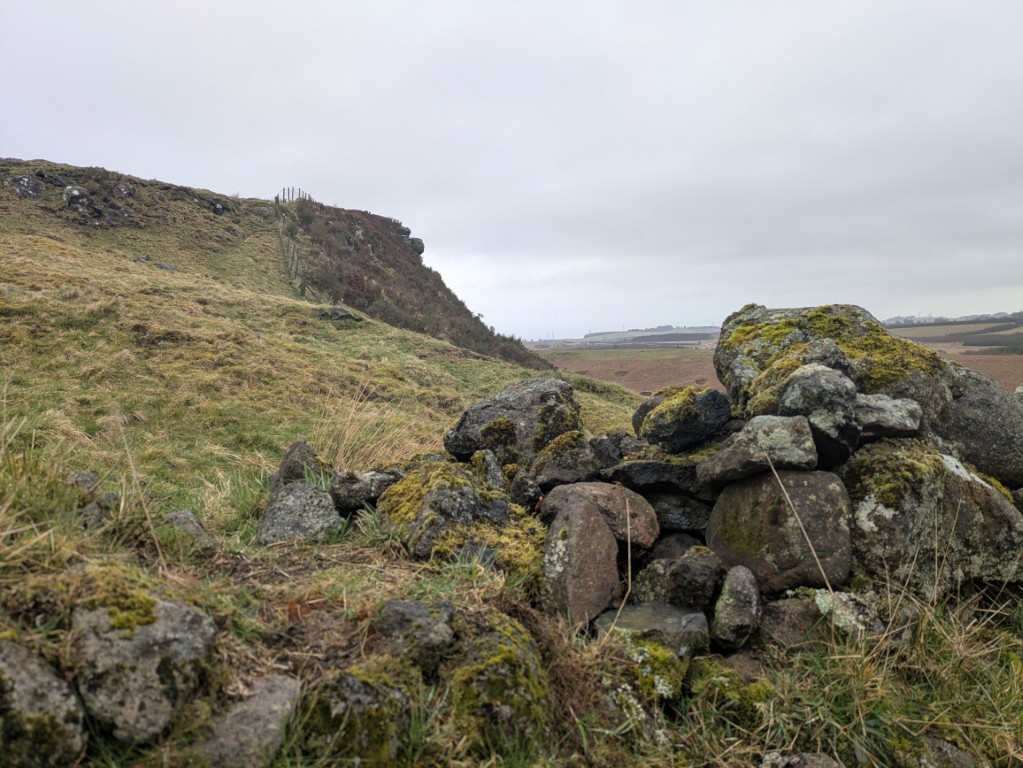
Photo: Landscape near Walls Hill Fort, where woodland planting has been carefully designed to protect the historic site
Photo Credit: Scottish Water
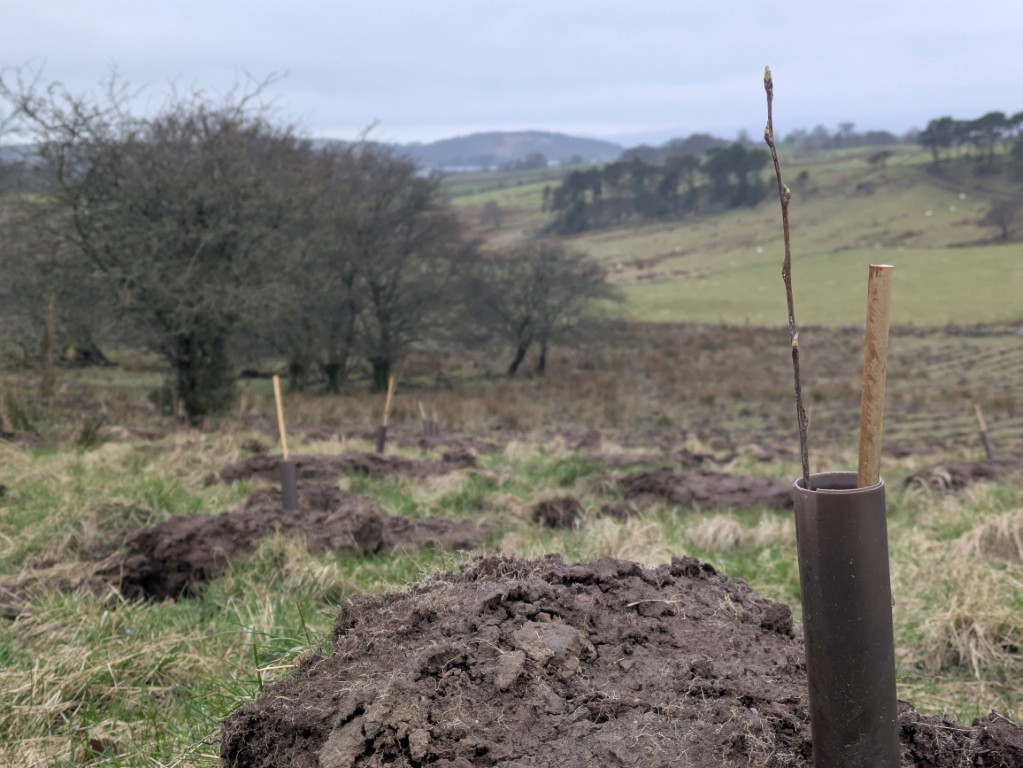
Photo: Newly planted trees at the Springside site in the Barcraigs Reservoir catchment
Photo Credit: Scottish Water