


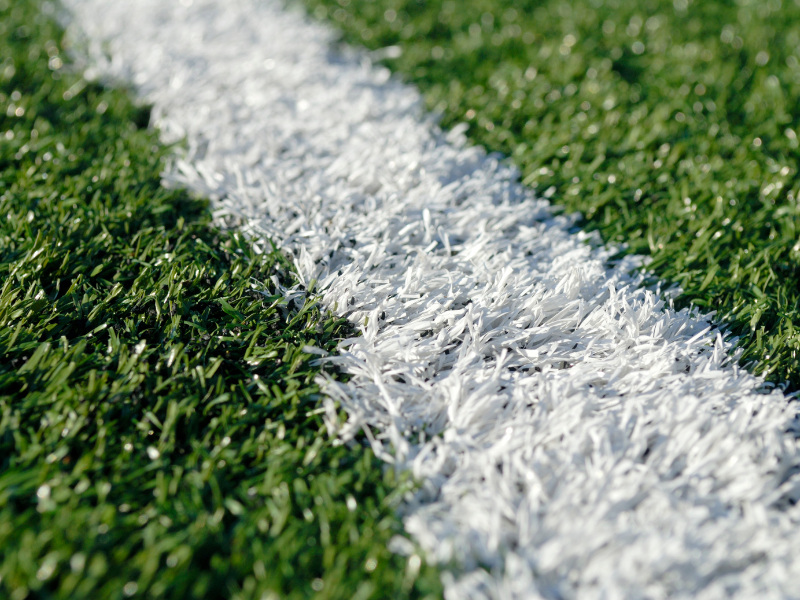
A team of researchers at University of the West of Scotland is helping lead a new £1.3 million project aimed at finding sustainable ways to recycle artificial sports pitches when they reach the end of their lifespan.
The three-year project, known as ReSurface, will examine how the UK can create a more effective and environmentally responsible system for managing and recycling synthetic turf materials.
Millions of square metres of artificial turf are removed across the UK each year, but recycling options remain limited. Many old surfaces must be transported long distances to specialist recycling facilities, increasing both costs and carbon emissions.
The ReSurface project will investigate new methods of recovering valuable materials from used pitches, including infill materials, backing layers and plastics. Researchers will also explore potential commercial uses for recycled materials and examine how a future recycling network could operate across the UK.
The project is funded by the Engineering and Physical Sciences Research Council and the Department for Environment, Food and Rural Affairs. It brings together academics, industry experts, sports organisations and policymakers, with the research led by Loughborough University and UWS.
UWS’s contribution is being coordinated by Dr Phillip Cowie, alongside Dr Kiri Rodgers and Emeritus Professor Andrew Hursthouse.
Dr Cowie said: “As artificial sports pitches continue to play an increasingly important role in supporting participation and physical activity across the UK, we must also address the environmental challenge created when these surfaces reach the end of their lifespan.
“Every year, millions of square metres of artificial turf are removed, yet recycling options remain limited and much of the material is difficult to recover and reuse. This project aims to tackle this problem.”
Professor Hursthouse added: “ReSurface is an exciting project bringing together leading expertise from academia, industry and policy to develop practical solutions that can transform how synthetic turf is managed at end of life.
“By creating new recycling technologies, identifying higher-value uses for recovered materials, and exploring the most effective national recycling infrastructure, we aim to support the transition to a truly circular approach that reduces waste, lowers carbon emissions and delivers long-term environmental benefits for the sports sector and beyond.”
Researchers will compare different recycling infrastructure models, including regional processing centres and larger centralised facilities, to identify solutions that balance environmental benefits with economic viability.
The project also supports the United Nations Sustainable Development Goals, including sustainable cities and communities and partnership working.