


A Renfrewshire man has become one of the first patients to undergo robotic-assisted surgery at the Royal Alexandra Hospital as NHS Greater Glasgow and Clyde expands access to minimally invasive procedures.
William Gillespie, 83, from Elderslie, had a bowel tumour successfully removed using the da Vinci Xi surgical system at the Paisley hospital on 30th April.
It is the first time a surgical robot has been used at the RAH. NHS Greater Glasgow and Clyde said the move brings advanced care closer to home for patients across Renfrewshire, Inverclyde and West Dunbartonshire.
The health board has now carried out more than 5,000 robotic-assisted procedures across its hospitals.
The expansion has been supported by investment in a new dual console da Vinci Xi system at the Queen Elizabeth University Hospital. NHS Greater Glasgow and Clyde said this doubled colorectal cancer surgery capacity there and allowed an existing system to be transferred to the RAH.
The project followed an £800,000 donation from a former patient and his wife, who wish to remain anonymous, along with a further £400,000 from the Beatson Cancer Charity.
Robotic-assisted surgery allows surgeons to carry out complex procedures through small incisions.
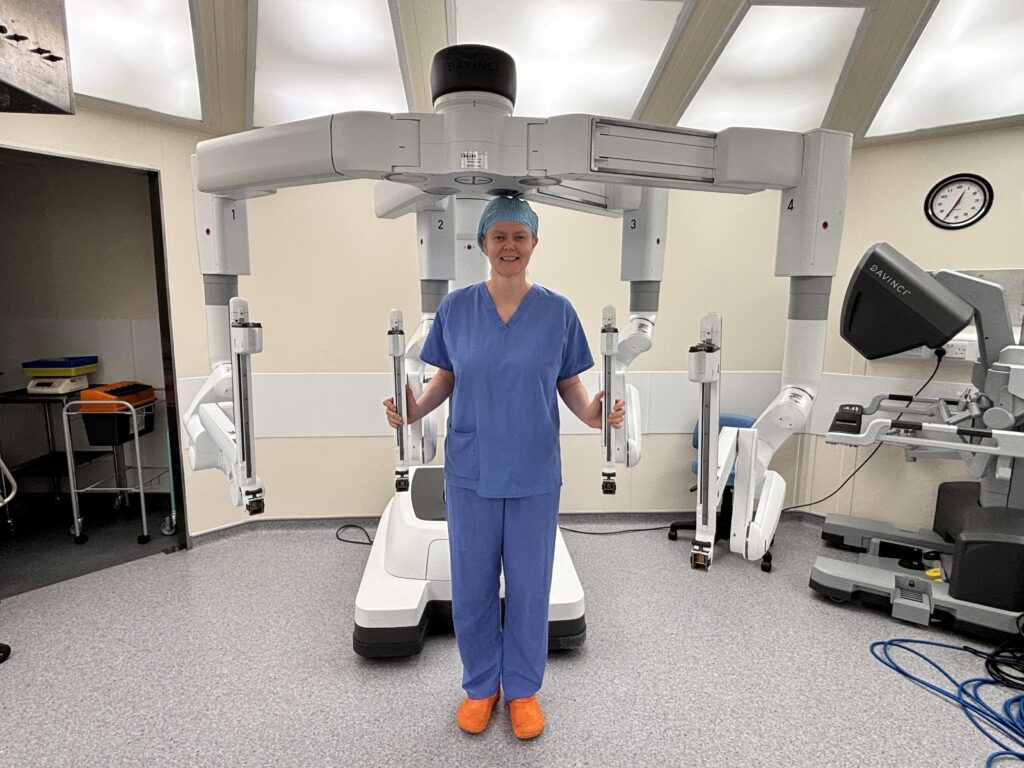
Photo: Professor Susan Moug with the da Vinci Xi surgical system at the Royal Alexandra Hospital in Paisley, where robotic-assisted surgery is now being carried out for the first time
Photo credit: NHS Greater Glasgow and Clyde
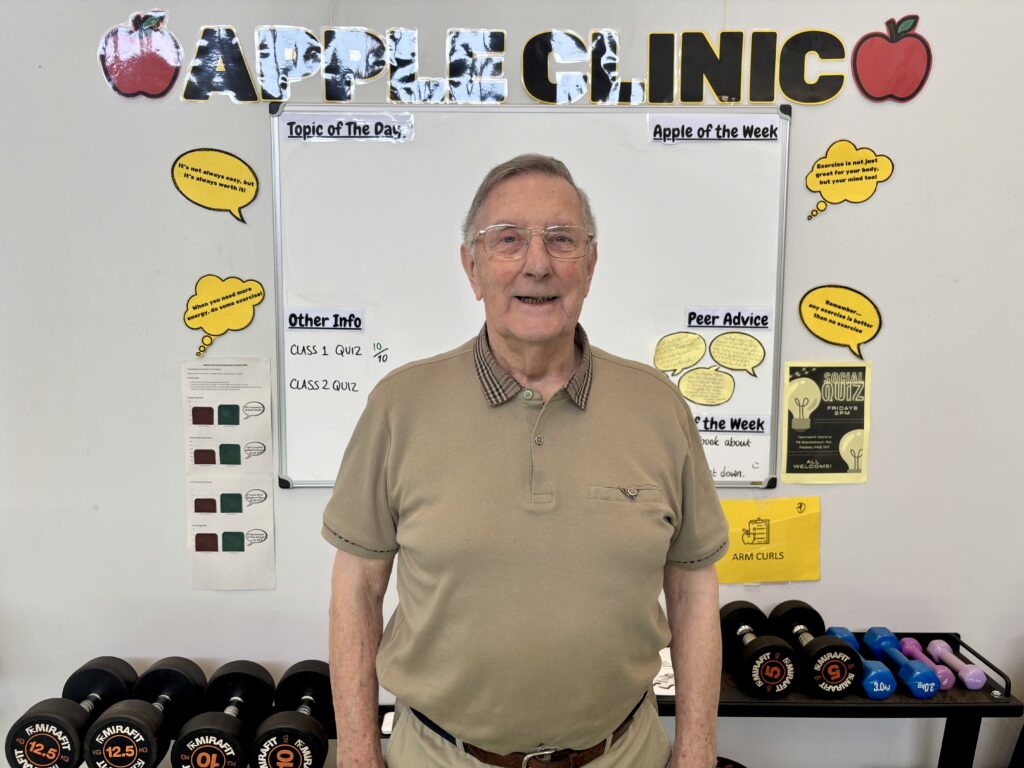
Photo: William Gillespie, 83, from Elderslie, who became one of the first patients to undergo robotic-assisted surgery at the Royal Alexandra Hospital in Paisley
Photo credit: NHS Greater Glasgow and Clyde
The health board said this can lead to quicker recovery, reduced pain, fewer complications and shorter hospital stays.
Before his operation, Mr Gillespie attended the RAH’s “prehab to rehab” Apple Clinic, where patients are supported to improve their fitness ahead of treatment.
The clinic is led by physiotherapists Mhairi Burke, Elaine Crookston and Gerard Church, along with specialist nurses Amy Lewis and Maggie Clark.
Patients are offered exercise sessions and advice on healthy eating and stopping smoking before surgery.
Speaking about his experience, Mr Gillespie said: “I was really pleased to be able to have my operation here at the RAH, which is my local hospital. It made a big difference not having to travel further afield.
“It also helped my family, as it was much easier for them to get in to see me and support me while I was in hospital.
“The surgery itself was very straightforward from my point of view, and I’ve felt the benefit of it being less invasive, getting out of hospital much sooner than if it was an open procedure and with less complications.
“Knowing that they can do this kind of procedure with smaller incisions and a quicker recovery is very reassuring.”
Professor Susan Moug, consultant surgeon at the RAH, said the introduction of robotic-assisted surgery at the hospital was a major step forward.
She said: “Having a robotic-assisted surgical system at the RAH for the first time is transformational for patients in our local communities.
“It allows us to provide high-quality, minimally invasive surgery closer to home, reducing the need for patients to travel while continuing to improve outcomes and recovery times.”
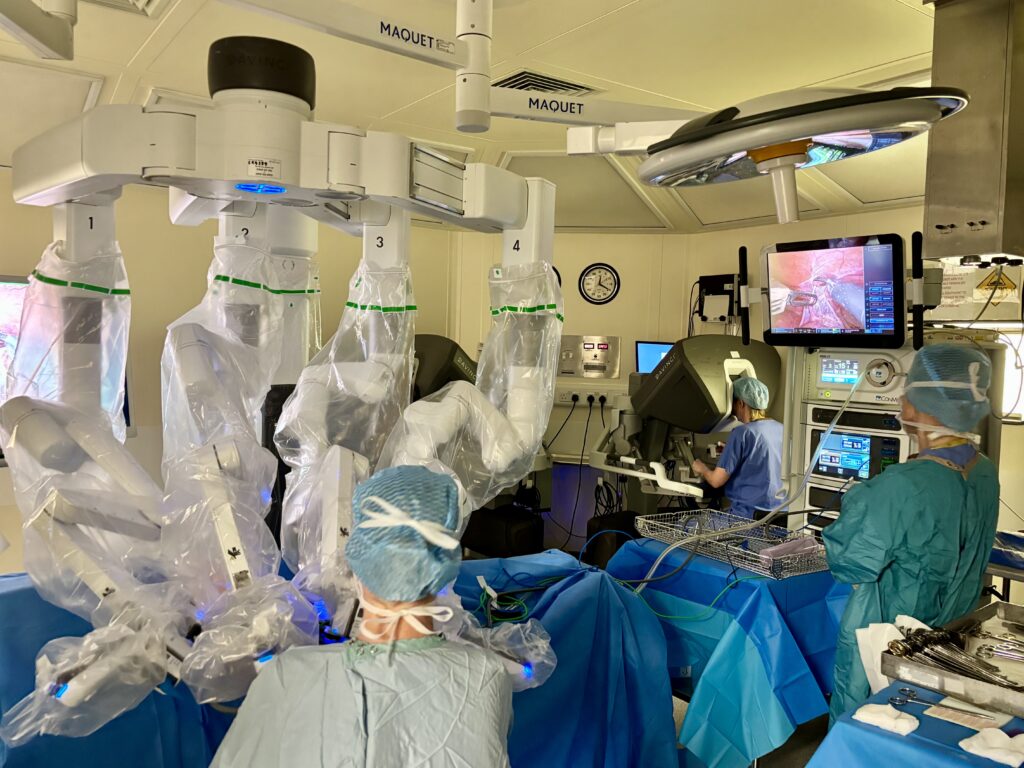
Photo: Staff carry out one of the first robotic-assisted procedures at the Royal Alexandra Hospital in Paisley using the da Vinci Xi surgical system
Photo credit: NHS Greater Glasgow and Clyde