


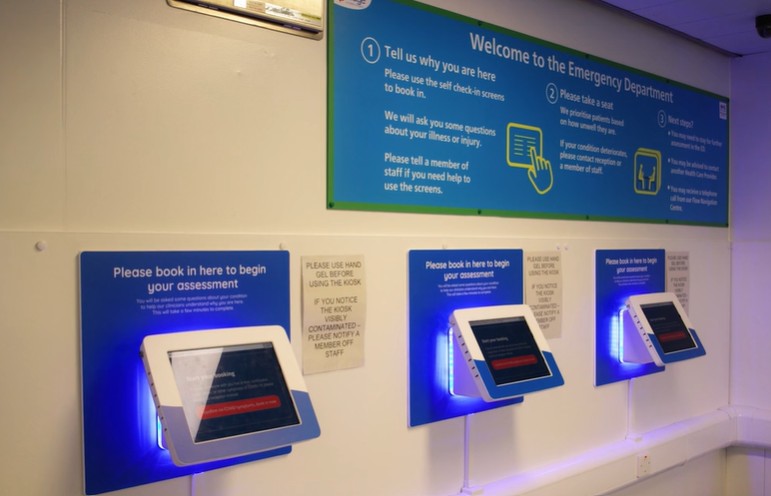
NHS Greater Glasgow and Clyde is introducing a new digital triage system at the Royal Alexandra Hospital in Paisley to help staff prioritise patients with the most urgent need.
The system, known as eTriage, is being rolled out across the health board’s A&E departments. It has already launched at the Queen Elizabeth University Hospital and will be introduced at the Royal Alexandra Hospital, Glasgow Royal Infirmary and Inverclyde Royal Hospital.
When patients arrive at A&E, they will check in using a digital kiosk and answer a short series of clinically designed questions about their symptoms using a touchscreen.
Their responses will be sent instantly to the clinical team, giving staff detailed clinical information within minutes of arrival.
NHS Greater Glasgow and Clyde said this will allow clinicians to prioritise patients who need urgent treatment and help ensure the safest possible care.
The digital triage system is part of the health board’s Virtual Hospital programme, which aims to improve patient flow, reduce delays and make sure people receive care in the most appropriate setting.
As the system develops, some patients whose conditions do not require emergency treatment could be directed to other services. This could include receiving clinical advice, a virtual consultation, a booked appointment elsewhere or guidance to a more suitable care setting.
The health board said this approach will help keep A&E departments focused on patients with the most serious and complex conditions while helping others receive care more quickly.
The system will also allow patients to share sensitive information privately through the kiosk rather than discussing it at a busy reception desk.
Patients who would rather speak to a member of staff, or who need additional support because of accessibility needs, language barriers or confidence using digital technology, will still be able to use the traditional reception desk.
NHS Greater Glasgow and Clyde said the system will not replace any staff roles. It is intended to give clinicians key information more quickly and provide emergency teams with real-time visibility of patients in the waiting room.
Lorraine Cowie, Director of Interface for NHS Greater Glasgow and Clyde, said: “Introducing digital triage across our A&E departments is an important step in improving how quickly and safely we assess patients.
“By giving clinicians immediate access to high quality information, we can prioritise those in most urgent need and reduce delays.
“As part of our wider Virtual Hospital programme, this approach will also help us guide some patients to more appropriate services, including offering advice, virtual support or booked appointments elsewhere when it is safe to do so.
“This means A&E can focus on the most serious conditions, while other patients are seen more quickly in the right setting.
“Patient safety will always remain our priority, and anyone who needs emergency care will continue to receive it.”
Video: Gerry McLaughlin, Lead Nurse at the Royal Alexandra Hospital’s Accident and Emergency Department, explains how the hospital’s new digital check-in and triage system will help clinicians assess patients more quickly while ensuring those with the most urgent needs are prioritised
Video Credit: NHS Greater Glasgow and Clyde